Finding the ideal tire for every circumstance is the holy grail, but it's not impossible. We spoke with Bike Sukanjanapong, the founder of Vee Tire, about their recent endeavors in achieving this.
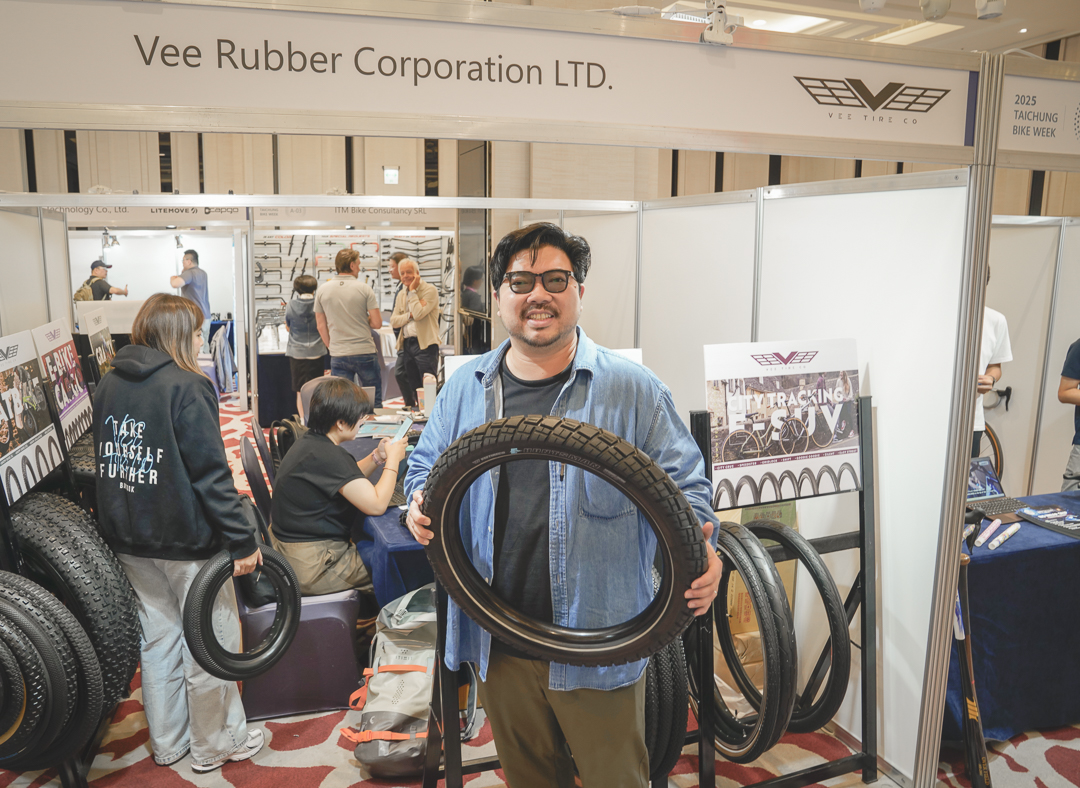 Vee Tire attended this year's Taichung Bike Week (Pic: Ash Suter)
The number of tire and wheel combinations for various outcomes is astounding, with some people mixing up hybrid combinations for their personal use, but this could result in a loss in performance. "How can we make a tire that can be made all-road?" he threw out there.
He continued, “Some people put MTB tires on a gravel bike, or gravel tires on a street bike, etc. For our gravel lineup, the three most crucial factors to take into account are construction, design, and compound. We are producing our Gravity tires with our new radial casings, which work incredibly well on wider MTB wheels.
“We are also launching high-end Trail radial casing tires (like on the Attack HPL); we have them in 16, 20, and 24—the full lineup with 27.5 and 29, with good reviews so far. They’re already on sale and key for us this year.”
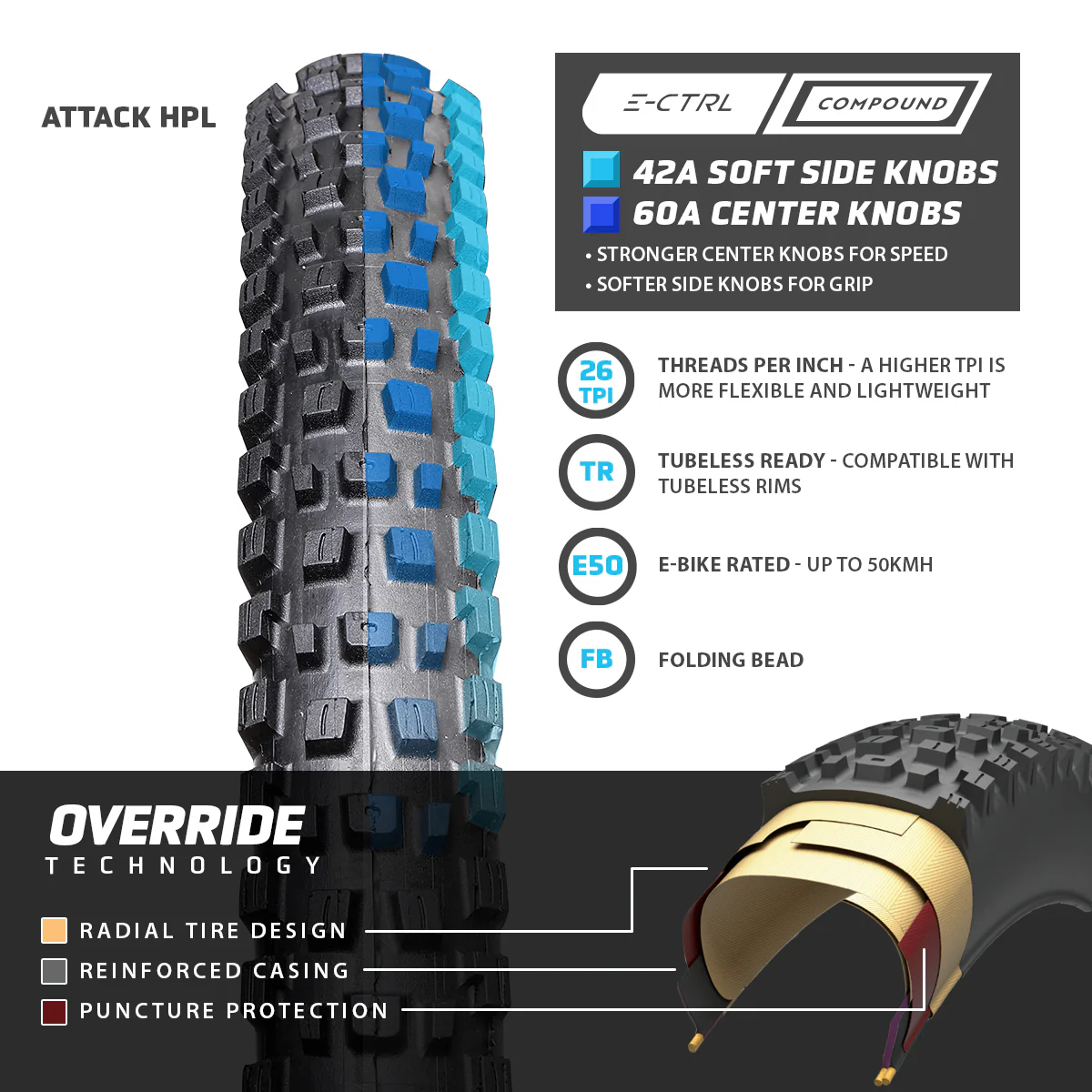 Vee Tire’s own breakdown of the Attack HPL (Credit: Vee Tire)
Vee Tire’s foray into radial casings marks a significant shift from traditional bias-ply construction. By placing the casing plies in the direction of travel, the radial design allows the tire to flex more naturally, improving comfort and traction without sacrificing stability.
From high-volume all-road and gravel models to reinforced gravity and e-MTB versions that use layered sidewall protection for impact resistance, the result is a tire that maintains a more consistent contact patch, reduces casing deformation under load, and offers better control at lower pressures. It’s a technology long used in the automotive and scooter industry, “now being introduced into the cycling world”.
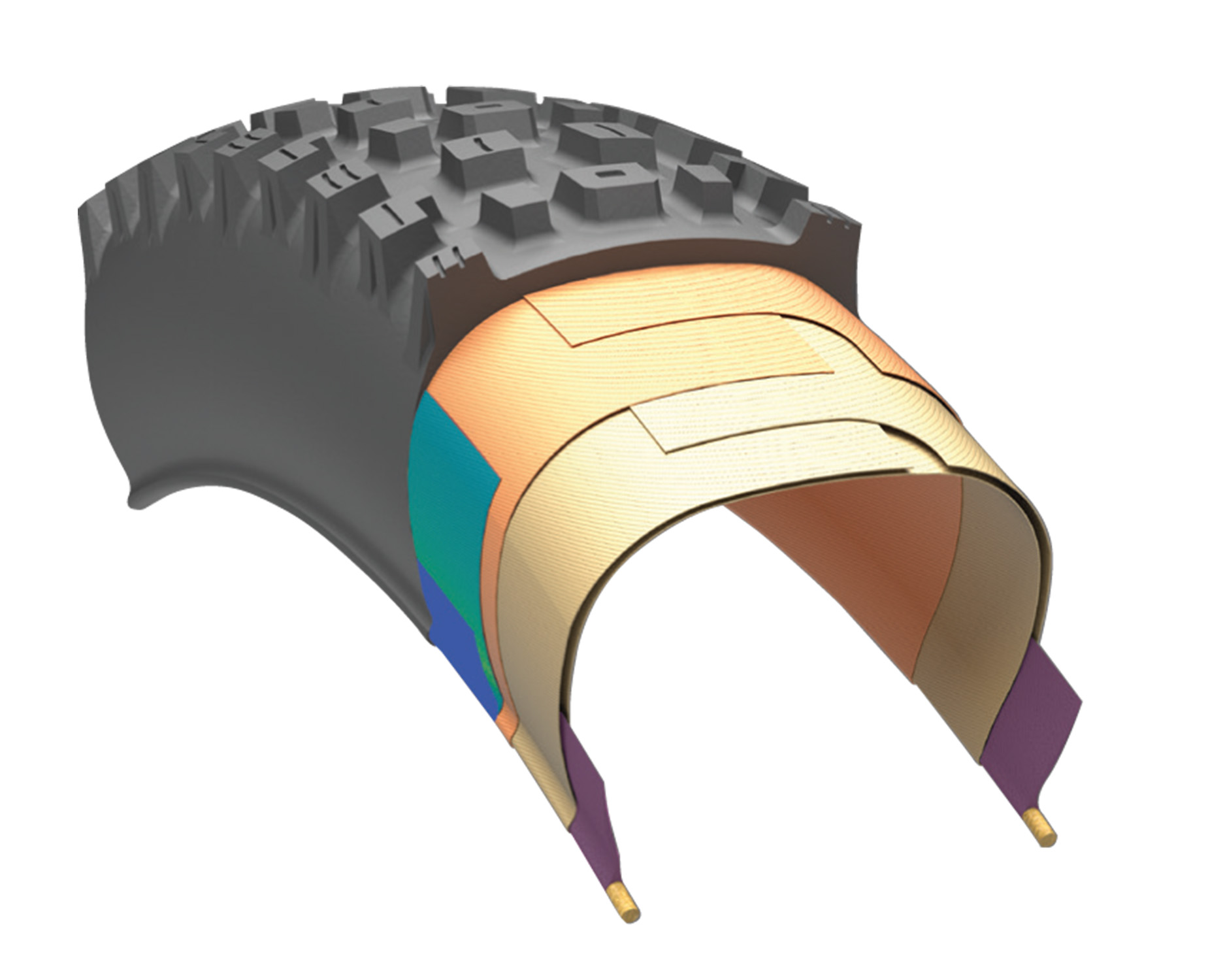
Vee Tire’s Radial Casing with Rad Core (Credit: Vee Tire)
Since Vee Tire is an original equipment manufacturer (OE) for Honda, and Yadea scooters in China, they can take the know-how and expertise with their resources and technology across the family of Vee Tire, since they have cars, motorcycles, and bicycles in the same portfolio.
“Take yourself further” is Vee Tire’s motto, and they like to always think about new innovations. “Tires can lead to innovations to make new vehicles in the world,” said Bike. "You can't have new dimensions (in wheels) if tires are not involved. We want to be involved with the other talented people in the industry that can take people further.”
There is a lot of testing Vee Tire undertakes at their own labs and partner labs, but now it's not enough to test the tire standard only with the development of bike parts and frames. They must test the tire with the full bike. It’s getting more extreme than that tire test itself, and it’s something Bike Sukanjanapong is continuously learning. He said, “Before, we could get an E mark from Europe, but things are changing; the rim and vehicle can all have an input.
“Normally, ISO testing is done, but at the same time we need to check the testing on the tire section on the bike. The bikes have such high innovation; we need to do it with the tire with all the possible parts.
“It's not enough by itself. From pressure tests to extreme conditions tests. We learned a lot with the fat tires—that sometimes people put just a little pressure on the tire. So we need to do a low test, 8 psi, for example, because the consumer could use the tire in many different ways; it needs to be tested more with brands, and we look to see how the bike will actually be used. In factory lab testing, our good partners like Fuji-Ta and Insera help us with the testing side, and we’re lucky everybody is very nice.
“We have our rubber plantation; we do the entire process as well. We are 'Tree to Tire. I’m the second generation of the family company; I know it’s not easy, but we look to make things simpler,” said Mr. Sukanjanapong.
Next year looks to be challenging for the sporty section, but it's promising, with the gravel, sport, and commute tires set to be the best sellers according to Bike. He said, “The second best segment is going to be the cargo bike, like the Long John. It can come in many sizes, and it can become even more compact. The trend of the Long John cargo bike is going to be key. We are the first ones to make a 20x4.0 tire already. It's already been successful. We’re the first to do the 32-inch as well.
“Not every brand is committed to 32”, but it’s going to be great for cross country and for lots of tall riders who will benefit from it. We are one of the first fat bike tire companies, so it’s very interesting for us, as we’ve already tried “bigger” before.”
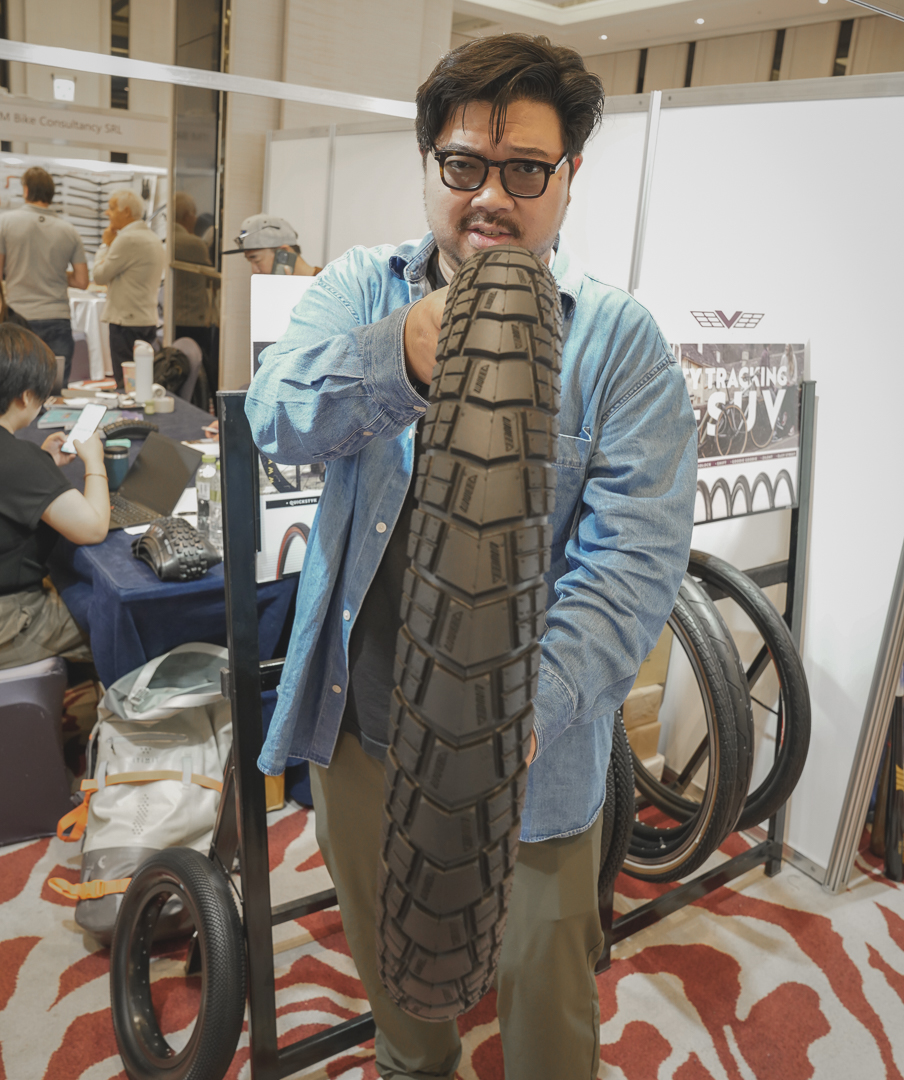
Mr. Sukanjanapong with one of their fat tires, the Huntsman. (Pic: Ash Suter)
Mr. Sukanjanapong feels positive about the industry; the commuting and gravel sectors, he believes, are what people need to focus on. “The sport tires are more risky for business, but radial construction makes the contact footprint longer, giving more performance and comfort for longer. Sport still needs innovation, but everybody should focus on commuting. The sporty and commuting sectors of the industry need to split apart, in my opinion,” said Sukanjanapong.
In recent times, trade shows, and Eurobike, in particular, have been key arenas for such new innovations and developments to be shown. “I feel that Eurobike was quiet this year,” said Bike, “but very good for us. I feel the better contact for distribution was there with fewer visitors. At Taichung Bike Week, people were pushing to ship quickly in October to catch up in time for Black Friday and Christmas. We see the inventory in the market is finally going down, and new models are coming. I feel really positive and happy about the industry, having met many Chinese, Taiwanese, and US and German OE partners.”
Although the number of e-bikes seen on the roads in Asia is always going up, it’d be quite a rarity, in Taiwan in particular, to see them used for last-mile delivery services. Mr. Sukanjanapong gave his opinion on why it’s hard to convince Asia to copy Europe in regard to this.
“In Asia we have to understand the price (for e-bike options) is much more expensive than scooter prices,” he said. “The sustainability trend in Europe is stronger, with bike lanes, etc., too. Especially in Thailand, we have the Saleng motorcycle powered by cheap gasoline, but how the infrastructure and pricing can benefit us in the short term is hard. It’s super cheap. Taiwan needs to take the lead, along with Japan and Thailand. We are still underdeveloped in comparison.”