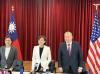
On January 15, 2026, the U.S. Department of Commerce officially announced a historic trade and investment agreement with Taiwan. In a landmark "Taiwan Model" deal, Taiwan has committed to a total of $500 billion USD in investments and credit guarantees in exchange for a reduction in U.S. Reciprocal Tariffs to a 15% non-stacking cap.
This agreement places Taiwan on the same competitive footing as Japan and South Korea, effectively ending the period of high-tariff uncertainty for Taiwanese exports to the U.S.
I. The $500 Billion Investment Framework
The agreement is built on two primary pillars aimed at reshoring advanced manufacturing to the United States:
1. Direct Corporate Investment ($250 Billion): Leading Taiwanese firms in semiconductors, AI, and renewable energy will expand their U.S. manufacturing footprint. Commerce Secretary Howard Lutnick specifically noted TSMC’s land acquisition in Arizona as a cornerstone of this expansion.
2. Government Credit Guarantees ($250 Billion): The Taiwanese government will provide financing guarantees to support small-and-medium enterprises (SMEs) and supply chain partners in establishing industrial clusters within the U.S.
II. Immediate Tariff Relief: 15% Cap & Zero-Tariff Categories
The pact provides significant relief for Taiwan’s key export sectors:
1. 15% Non-Stacking Rate: General tariffs on Taiwanese goods are lowered from 20% to 15%. Crucially, this rate is non-stacking, meaning it will not be added on top of existing Most-Favored-Nation (MFN) duties.
2. Strategic Industry Benefits: For high-priority sectors like automotive parts and lumber, Section 232 tariffs are now capped at 15%. Additionally, generic pharmaceuticals and aerospace components will enjoy a 0% tariff rate.
3. Construction Exemptions: Taiwanese firms building U.S. facilities can import equipment and products tax-free at up to 2.5 times their planned capacity during the construction phase.
III. A Major Win for the Bicycle Industry
Taiwanese bicycle manufacturers now hold a decisive cost advantage over regional competitors:
1. Electric Bikes (HS 8711): Taiwan’s total tariff is now 15%, providing a 4–5% cost advantage over Vietnam (20%) and Cambodia (19%).
2. Traditional Bikes (HS 8712): Due to the 15% non-stacking cap, premium Taiwan-made mountain bikes will avoid the combined 31% duties (11% MFN + 20% Reciprocal) faced by other nations. This represents a 16% tariff saving, drastically improving the competitiveness of Taiwan’s high-end cycling products in the U.S. market.
IV. Strategic Vision: Deep Supply Chain Integration
U.S. Secretary of Commerce Howard Lutnick emphasized the goal of moving 40% of Taiwan’s semiconductor supply chain to the U.S. While the agreement involves a shift in production capacity, it serves as an "Angel Clause" for Taiwan, securing its position as an indispensable partner in the global supply chain and mitigating geopolitical risks.