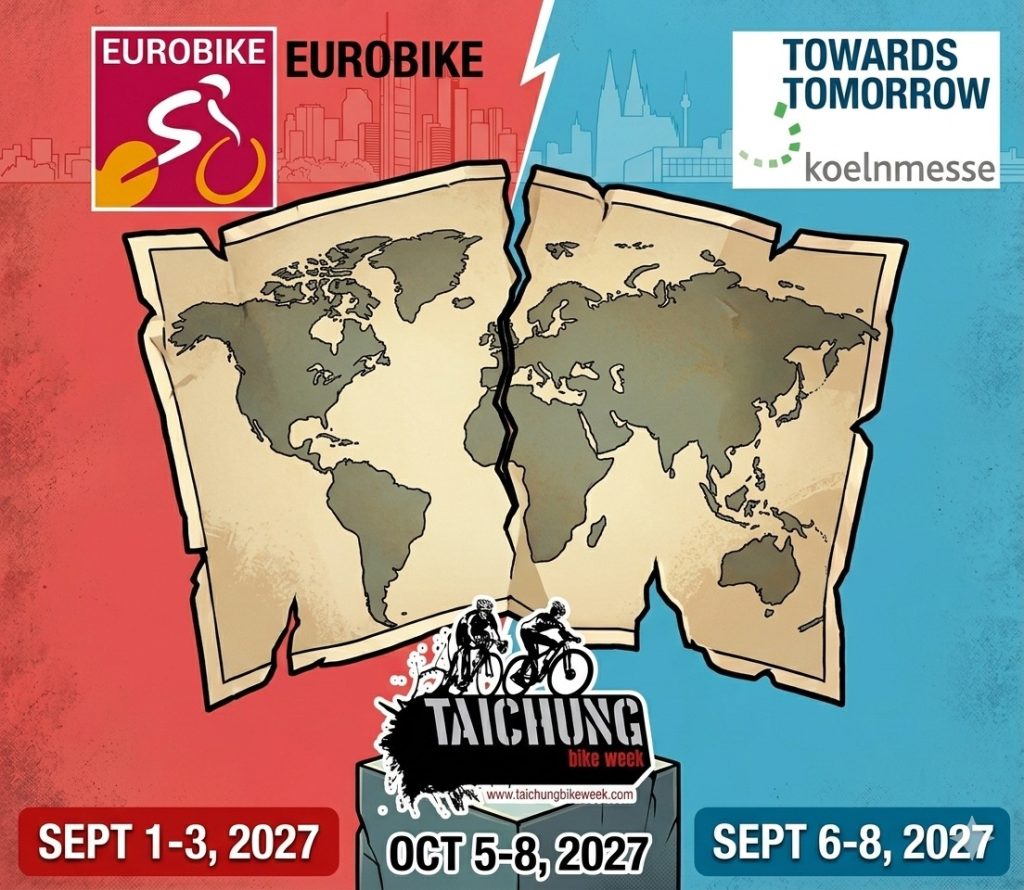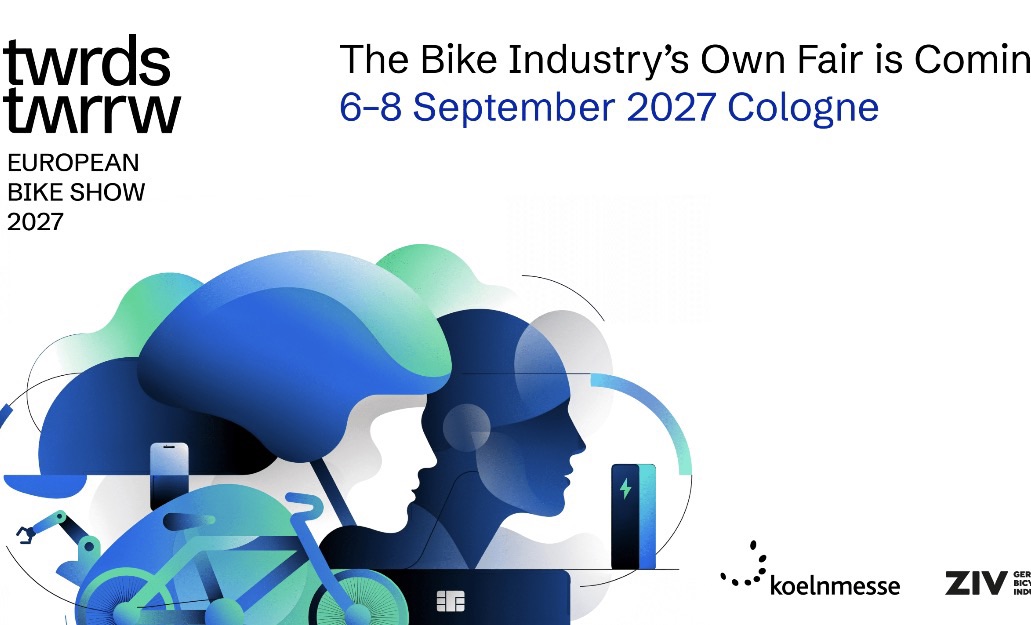
The global bicycle industry is bracing for an unprecedented autumn showdown in 2027. Following the announcement that the newly formed “towards tomorrow – European Bike Show” will debut in Cologne from September 6–8, 2027, the international trade calendar has become intensely congested. With Eurobike 2027 shifting back to its traditional slot (Sept 1–3) and major European retail buying groups like Bico hosting private exhibitions around the same period, early autumn 2027 is shaping up to be a severe logistical challenge.
Furthermore, the newly launched “CycleExpo Amsterdam”—a specialized B2B and OEM trade fair—has set its dates for October 6–8, 2027, directly overlapping with Taiwan’s pivotal “Taichung Bike Week (TBW)” (Oct 5–8). As a result, global suppliers and buyers now face critical decisions regarding budget allocation and travel efficiency.
The Supplier’s Dilemma: Legacy vs. Domestic Alliances
For component suppliers and OEM/ODM manufacturers, exhibiting at multiple major events within the same month is financially and logistically prohibitive.
Eurobike (Frankfurt): Returning to early September, Eurobike remains the premier global legacy platform. Suppliers aiming to maintain a multi-continental reach and tap into a massive, well-established international visitor base will continue to prioritize Frankfurt.
towards tomorrow (Cologne): Backed directly by the German Bicycle Industry Association (ZIV) and Koelnmesse, this event represents the ultimate domestic insider platform. It offers direct access to key retail purchasing alliances within Germany—Europe's largest bicycle market.
CycleExpo Amsterdam: Positioned as a low-cost, full-service alternative near Schiphol Airport, this show targets mid-to-small tier OEM suppliers looking for rapid autumn B2B match-making without high booth construction costs.
The Buyer’s Conundrum: Travel Fatigue and Specification Timelines
For international buyers and product managers (PMs), time and physical energy are the primary constraints, given the densely packed schedule.
The German Double-Header: Buyers from Asia and North America will likely adopt a dual-attendance strategy. Since Frankfurt and Cologne are only an hour apart via high-speed train, PMs can evaluate global tech innovations at Eurobike before heading straight to Cologne to engage with European dealer networks.
The October Overlap: The clash between Amsterdam and Taichung Bike Week presents a strategic choice. While Amsterdam offers a convenient entry point into the European assembly market, Taichung remains the undisputed heart of high-end global component manufacturing and face-to-face specification (Spec-in) negotiations.
The Bottom Line: Sourcing Efficiency Re-defined
Ultimately, the bicycle industry is entering a trial period of intense tactical fragmentation. In an era where market dynamics shift rapidly, suppliers and buyers are no longer just choosing a venue; they are calculating efficiency. The true test for these competing platforms in 2027 will not be their historical legacy or institutional scale, but their capacity to deliver concrete transaction volume and optimal supply-chain synergy. The commercial outcomes of this chaotic autumn calendar will act as an immediate market sieve, forcing a rapid consolidation of global trade shows and redefining where actual sourcing budgets will be concentrated as the industry enters a post-inventory restructuring of the global supply chain.