The Office of the United States Trade Representative (USTR) released its Section 301 investigation findings on structural excess capacity on November 25, proposing a 15% tariff for Taiwan, Japan, the European Union, South Korea, and Switzerland, without stacking applicable MFN duties or Section 301 forced labor tariffs.
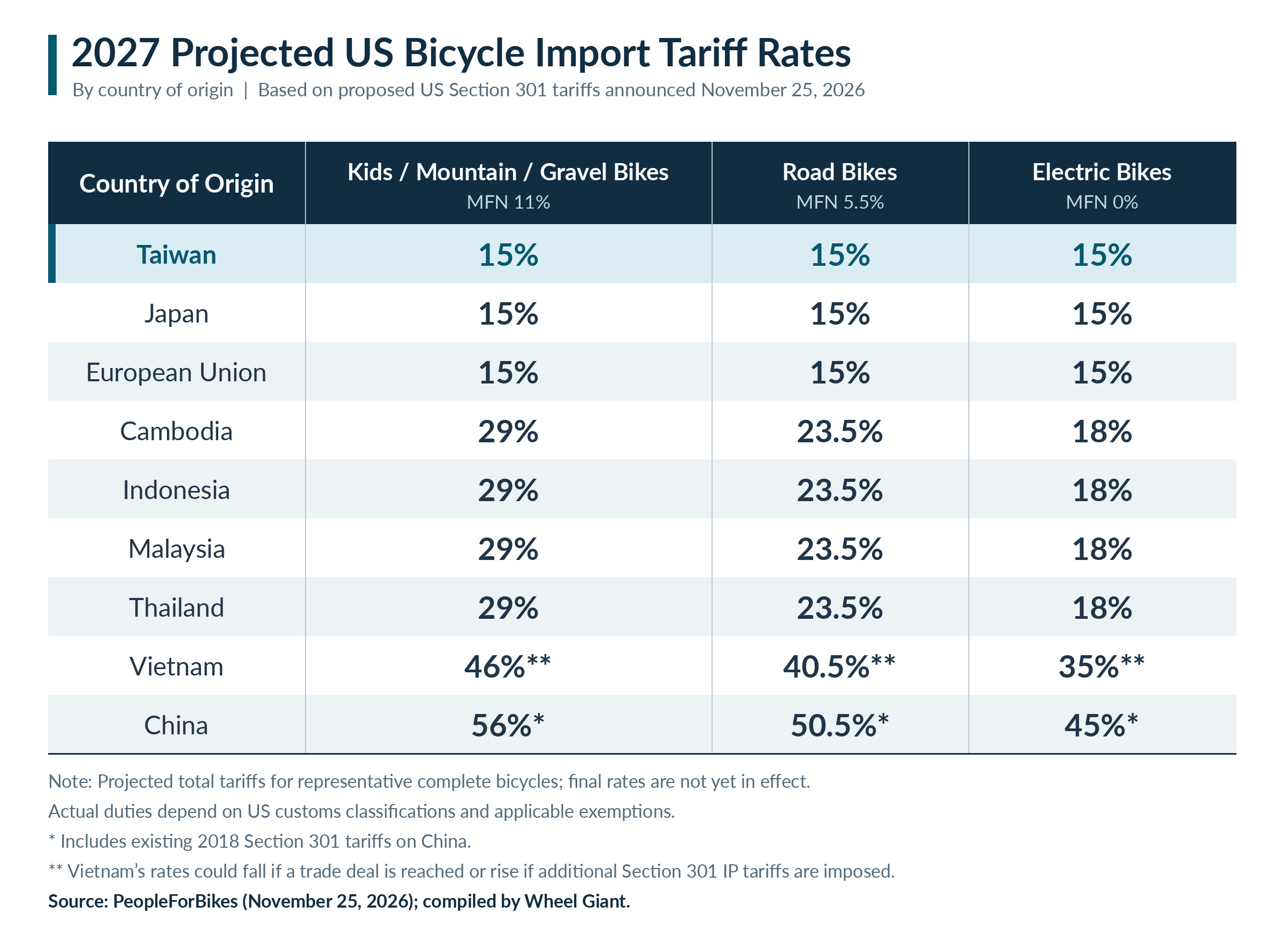
According to tariff projections by PeopleForBikes, Taiwan-made bicycles and e-bikes would face a total US import tariff of 15% in 2027. By comparison, projected tariffs range from 18% to 29% for Cambodia, Indonesia, Malaysia, and Thailand, 35% to 46% for Vietnam, and 45% to 56% for China.
Global Bicycle Supply Chains Face Further Realignment
The significant tariff differential could strengthen Taiwan’s manufacturing competitiveness, particularly in premium bicycles and e-bikes, potentially encouraging international brands to redirect orders and reconsider their sourcing strategies.
Meanwhile, Taiwanese manufacturers that have expanded production in Vietnam in recent years may need to reassess production costs, investment returns, and capacity allocation.
Beyond tariffs, manufacturing efficiency, local supply chain capabilities, labor costs, and rules-of-origin compliance will remain critical factors in global sourcing decisions.
Public hearings are scheduled to begin on January 25, 2027, with the proposed tariffs potentially taking effect in early February. However, final rates remain subject to regulatory proceedings and ongoing trade negotiations, particularly with Vietnam.
For the global bicycle industry, flexible manufacturing strategies and diversified supply chains will remain essential amid continued trade policy uncertainty.