The Australian Government has directed the Australian Competition and Consumer Commission (ACCC) to develop a nationally consistent safety standard for e-bikes and other battery-powered micromobility devices.
The proposed standard will apply to e-bikes, e-scooters and e-skateboards sold in Australia, with the aim of establishing consistent requirements across all states and territories. The government said the measure is intended to address the sale of high-powered and high-speed devices associated with serious injuries and fatalities.
The initiative builds on a decision by Australian Transport Ministers to adopt the international EN 15194 standard as guidance for determining which e-bikes are suitable for use on Australian roads. Under the proposed national requirements, compliant e-bikes would be limited to 250 watts of power, with motor assistance cutting out at 25 km/h. The framework would also cover battery, electrical and fire safety, as well as measures to prevent tampering with power and speed limits.
The move follows a meeting of Commonwealth, State and Territory Consumer Affairs Ministers on July 30, 2026, as part of broader efforts to strengthen Australia's product safety framework. The government has also committed A$6.6 million to strengthen product safety measures, including stronger reporting requirements, more effective recalls, tougher penalties and mandatory safety obligations for online marketplaces.
Current e-bike regulations vary between Australian states and territories. Western Australia, Queensland and Victoria already restrict e-bikes to a continuous rated system output of 250 watts, while New South Wales currently permits retailers to sell e-bikes with up to 500 watts of maximum continuous power, provided motor assistance cuts out at 25 km/h. NSW has announced a transition period allowing these 500-watt e-bikes to be sold and ridden on public roads until March 1, 2029.
The proposed national standard has drawn criticism from some NSW retailers, who argue that enforcement of existing requirements and illegal modifications are more pressing issues.
Scott Jeffrey, owner of Beaches Electric Bikes in Sydney, said many compliant e-bikes are modified after purchase to exceed the 25 km/h assistance limit. He argued that stronger enforcement is needed to address modified and non-compliant products.
Andrew Leigh, Assistant Minister for Productivity, Competition, Charities and Treasury, said the new standard would also address modification issues. He noted that some e-bikes entering Australia appear to comply with existing requirements but can subsequently be modified to become non-compliant.
“The standard will give Australians the confidence that the products being sold are legal and fit for purpose, and will help keep Australians safe,” said Catherine King, Minister for Infrastructure, Transport, Regional Development and Local Government.
Leigh added that nationally consistent standards would provide clearer expectations for manufacturers, retailers and consumers.
The ACCC is expected to begin by developing the national standard for e-bikes before moving on to other micromobility devices. Further details on the implementation timetable are expected to follow consultation with industry and state regulators.
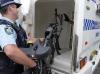
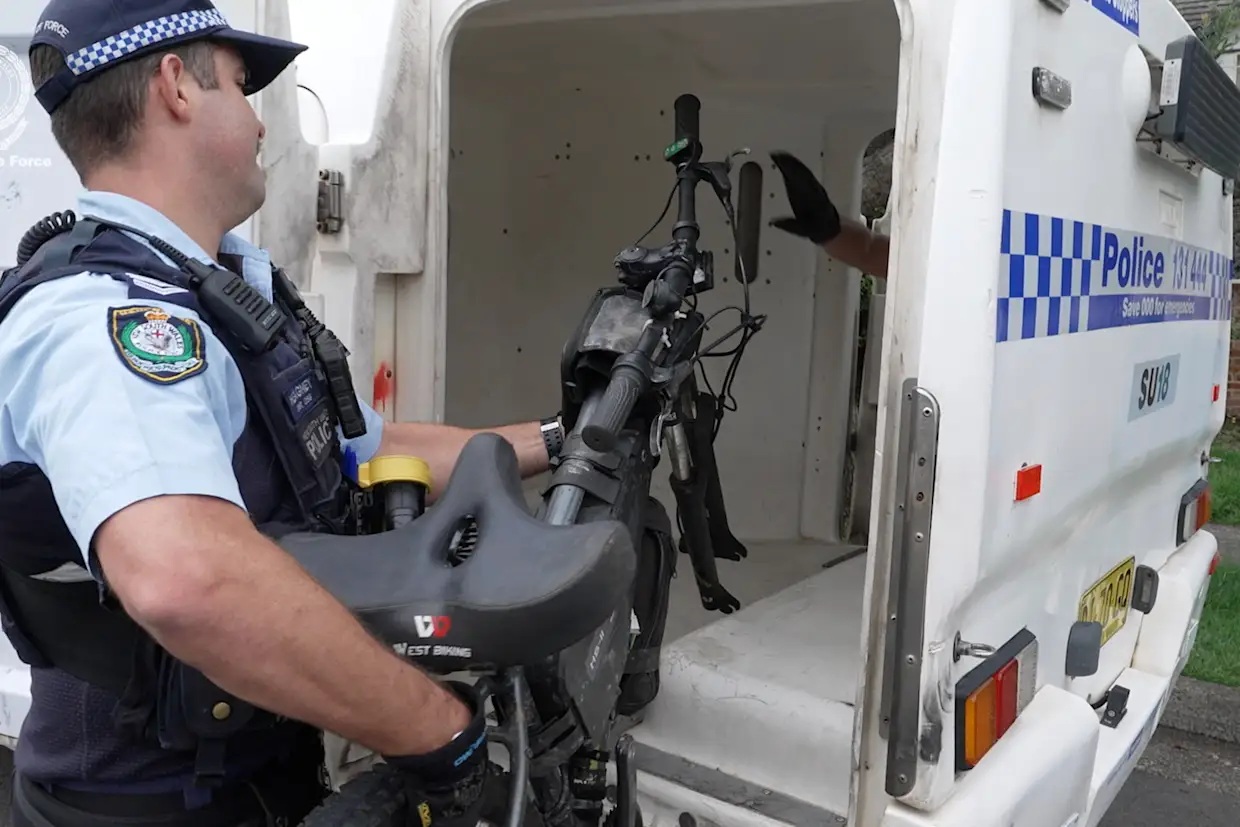 Photo: NSW Police