The European Union’s new Packaging and Packaging Waste Regulation (PPWR, Regulation (EU) 2025/40) entered into force on February 11, 2025, and became generally applicable on August 12, 2026.
The regulation covers virtually all packaging placed on the EU market, including bicycle cartons, component boxes, plastic bags, protective materials, pallets, stretch films and transport packaging. For bicycle and e-bike manufacturers exporting to Europe, packaging compliance is therefore becoming an increasingly important part of market access.
However, the key PPWR requirements will be introduced in stages rather than taking effect all at once in 2026. Major provisions include:
1. Recyclability: From 2030, packaging must meet minimum recyclability requirements. Packaging will be classified into A, B and C performance grades, while packaging below the minimum threshold may no longer be placed on the EU market.
2. Recycled plastic content: Certain plastic packaging will be required to contain minimum levels of post-consumer recycled (PCR) material, with targets increasing toward 2040.
3. Packaging minimization: From 2030, packaging weight and volume must be reduced to the minimum necessary for product protection and functionality. Certain grouped, transport and e-commerce packaging will also face limits on empty space.
4. Hazardous substances: Existing restrictions on heavy metals remain in place, while new PFAS restrictions primarily apply to food-contact packaging.
5. Harmonized labeling: The EU will gradually introduce standardized material and recycling labels. QR codes and other digital information tools will apply to certain packaging categories, particularly reusable packaging.
For the bicycle industry, the impact goes beyond simply changing cardboard boxes. Suppliers will increasingly need to review packaging materials, recyclability, plastic reduction, PCR content, packaging weight and technical documentation across their entire supply chain.
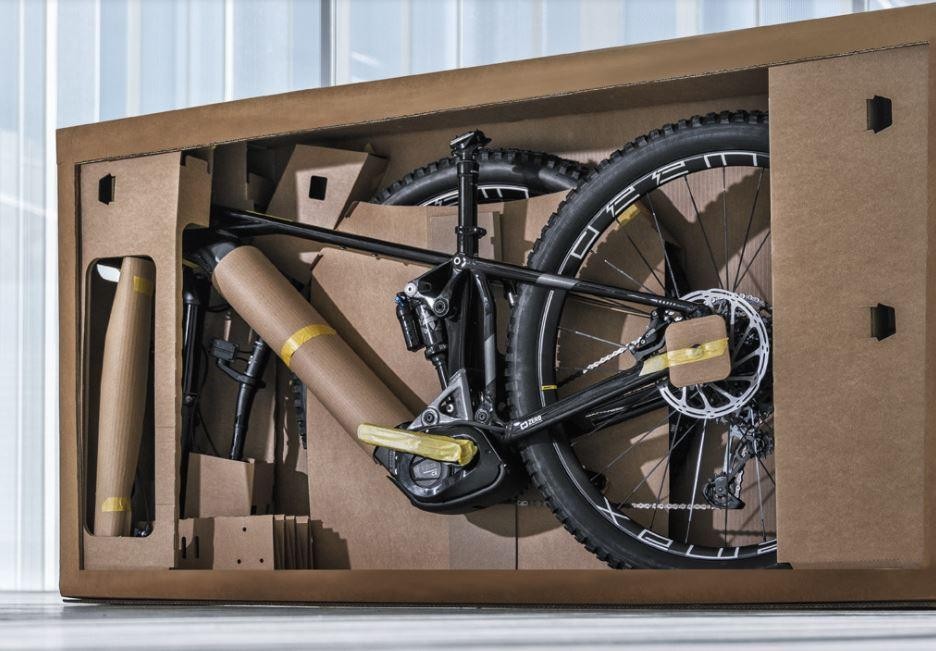
Several European bicycle brands have already moved in this direction. Kalkhoff, for example, has reduced plastic materials in its e-bike transport packaging, while Mondraker has introduced largely plastic-free and recyclable bicycle packaging.
As the PPWR implementation timetable moves toward 2030, lighter, recyclable, traceable and resource-efficient packaging will increasingly become a basic requirement for doing business in the European bicycle market.