Ireland and Paris have introduced stricter safety regulations for electric scooter riders, requiring helmets and high-visibility equipment. Ireland will also prohibit anyone under the age of 18 from using e-scooters.
In Ireland, new government measures will prohibit anyone under 18 from using an e-scooter. Riders of all ages will also be required to wear helmets and high-visibility clothing.
Further legislation planned for later in 2026 would classify e-scooters as mechanically propelled vehicles, introducing licensing and registration requirements. The proposed legislation would also prohibit the sale of e-scooters to anyone under 18, as well as the sale of e-scooters that do not meet legal requirements for use on public roads.
The regulatory changes follow growing concerns over serious injuries involving e-scooters. According to figures from Children’s Health Ireland (CHI) and the Health Service Executive (HSE), more than one-third of paediatric traumatic brain injury admissions at CHI at Temple Street in Dublin during 2026 were linked to e-scooter incidents. Admissions for traumatic brain injuries following e-scooter incidents increased by 50% over the previous 12 months.
In Paris, riders of e-scooters and other motorised personal mobility devices (EDPM) must wear a helmet and approved high-visibility or retro-reflective equipment when travelling on public roads. Non-compliance results in a fixed fine of €135 for not wearing a helmet and €35 for failing to wear high-visibility or retro-reflective equipment.
The Paris regulations apply at all times, day and night, and cover electric scooters alongside other motorised personal mobility devices, such as electric unicycles and hoverboards. Standard pedal-assist e-bikes are exempt from these new requirements and remain subject to bicycle regulations.
According to figures from the Paris Police Prefecture, 79 people were killed in France in 2025 in accidents involving personal mobility devices. In addition, around 1,100 e-scooter users suffered serious injuries in 2025, representing a 33% increase compared with the previous year.
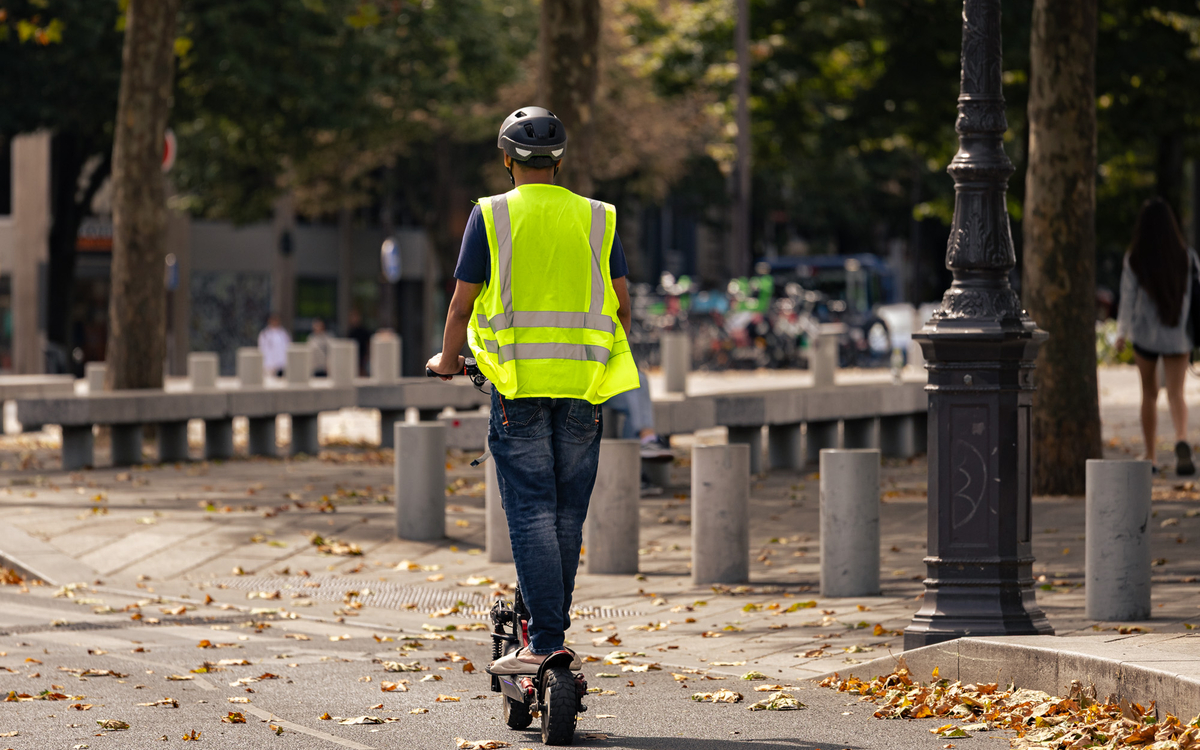 Photo: Guillaume Bontemps / Ville de Paris