The European Commission launched the Digital Product Passport (DPP) Registry on July 20, 2026, together with a testing environment to help businesses prepare for registration and compliance.
 Photo: European Commission
The DPP framework was established under the Ecodesign for Sustainable Products Regulation (ESPR), Regulation (EU) 2024/1781. Designed as a digital container for product information, the DPP aims to strengthen supply chain transparency, support more informed consumer choices, and facilitate compliance across the EU Single Market.
While product data is stored in a decentralised manner, economic operators are required to register each applicable DPP in the central Registry. The Registry provides the secure infrastructure needed to register unique product identifiers and associated metadata.
Web Interface and API Access
Economic operators can register through a secure user interface or an Application Programming Interface (API), allowing registration to be integrated into existing digital systems where appropriate. Companies can also request secure electronic proof of registration to demonstrate compliance to third parties, particularly in business-to-business (B2B) transactions.
The Registry also provides a free semantic repository containing machine-readable data models, definitions and vocabulary to support interoperability and data management across product groups. A verification framework and logging system are also included to strengthen security, accountability and access management.
Battery Passport Among the First Applications
The DPP Registry will support product groups covered by the ESPR, including textiles, steel and aluminium, tyres, furniture, ICT products and energy-related products. It will also support product groups covered by other EU legislation requiring DPP registration, including certain large batteries, construction products, toys, detergents and end-user surfactants.
For the battery sector, LEVA-EU highlighted the Battery Regulation as the specific legal basis for the battery passport requirement. The European Commission has identified February 18, 2027, as the first implementation deadline, by which date certain types of batteries will be required to have a DPP. The current testing phase is intended to help businesses prepare ahead of that deadline.
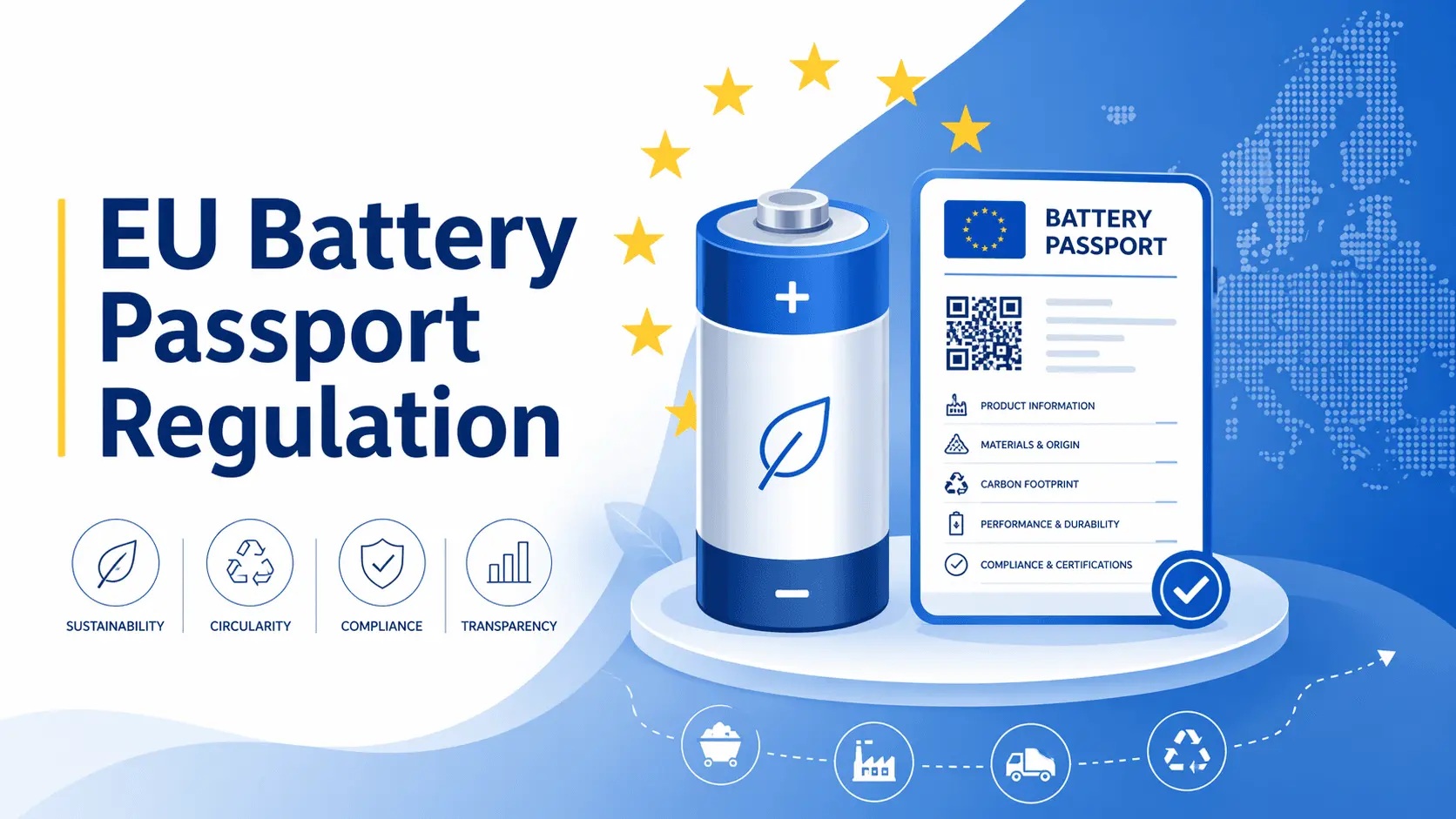 Photo: LEVA-EU
Six DPP Harmonised Standards Published
To support system interoperability, eight harmonised standards have been developed in cooperation with CEN-CENELEC. Six of these standards have already been published by national standardisation organisations, covering unique identifiers, interoperability, data carriers, APIs, data exchange protocols and data storage.
Businesses can access the testing environment, technical documentation, implementation guidelines, webinars and helpdesk support through the European Commission's DPP website.
Traceability software provider PSQR noted that the DPP Registry functions primarily as a central directory containing unique identifiers and basic registration details. Detailed passport information remains decentralised and is managed by the company placing the product on the market or its service provider.